Everything that makes a car usable — stopping at a crosswalk, swerving around debris, gliding over a pothole — comes from three systems that never get the spotlight. Together they form the chassis’s control layer: brakes, steering, and suspension.
Brakes: Converting Motion Into Heat
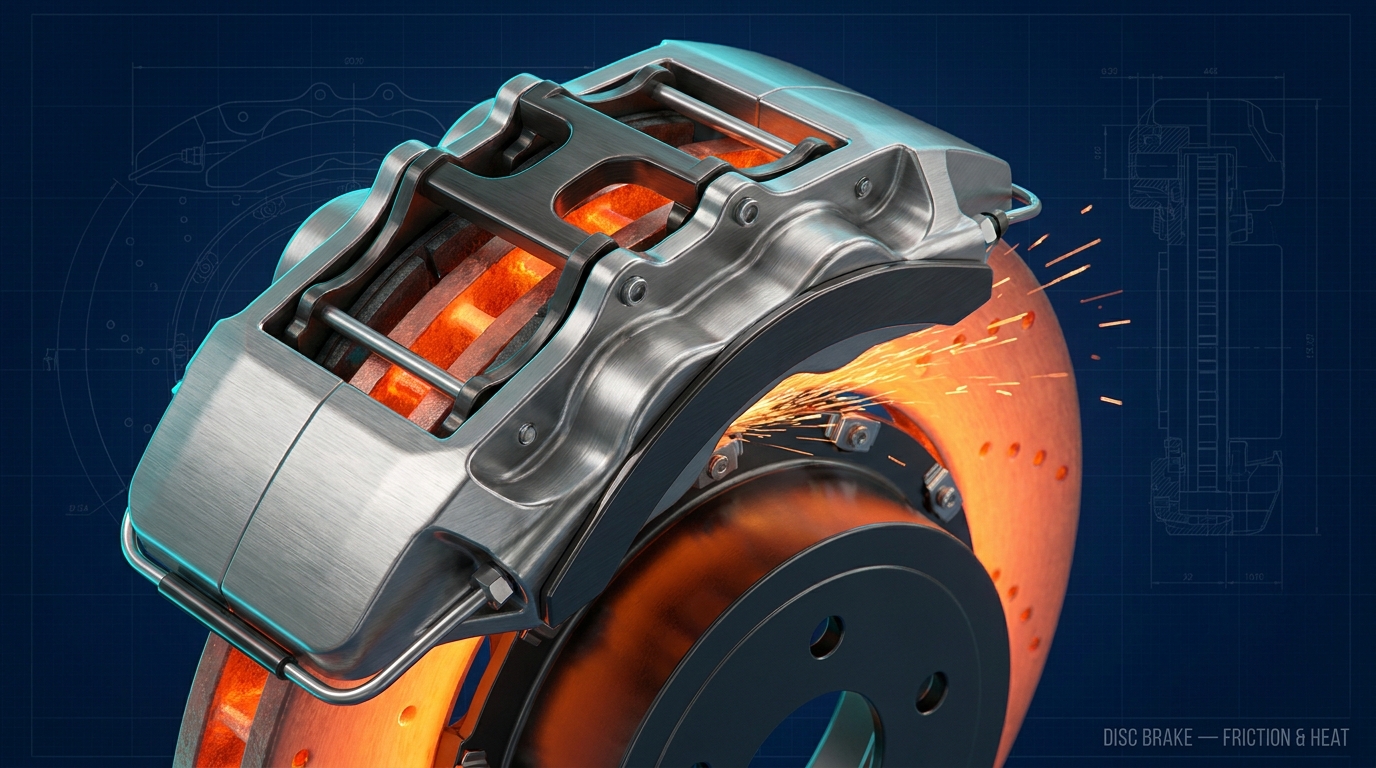
A moving car carries a huge amount of kinetic energy, and brakes get rid of it the same way rubbing your hands together warms them: friction. Braking literally converts your speed into heat.
The delivery system is hydraulic. Pressing the pedal pushes a piston into a sealed tube of brake fluid — and because fluid can’t be compressed, that pressure travels instantly through the lines to all four wheels, multiplying your leg force enough to halt two tons of metal.
At the wheels, most modern cars use disc brakes: a metal rotor spins with the wheel, and a caliper squeezes friction pads against it — like stopping a spinning plate by pinching it. Fronts matter most, since braking throws the car’s weight forward. Many budget cars still use drum brakes at the rear, where curved shoes press outward against the inside of a spinning drum — cheaper, and good enough for the lighter rear axle.
Steering: From Your Hands to the Pavement
Turn the wheel and you rotate the steering column, a shaft running down toward the front axle. At its base, a small gear — the pinion — rolls along a flat toothed bar called the rack. Spin the gear, and the rack slides left or right.
The ends of the rack connect to tie rods, sturdy arms that push and pull the front wheels to pivot them. That simple chain — wheel, column, rack and pinion, tie rods — is how a gentle motion of your hands becomes a precise change of direction.
Turning heavy rubber tires against pavement takes real strength, though, which is why power steering exists. A hydraulic pump or electric motor adds assist force, making the wheel feel light at parking speeds while firming up as you go faster.
Suspension: Keeping the Tires on the Road
Roads are never perfectly flat, and hitting a pothole sends a violent shock into the car’s frame. Without suspension, your teeth would rattle — and worse, the tires would bounce off the pavement and lose grip.
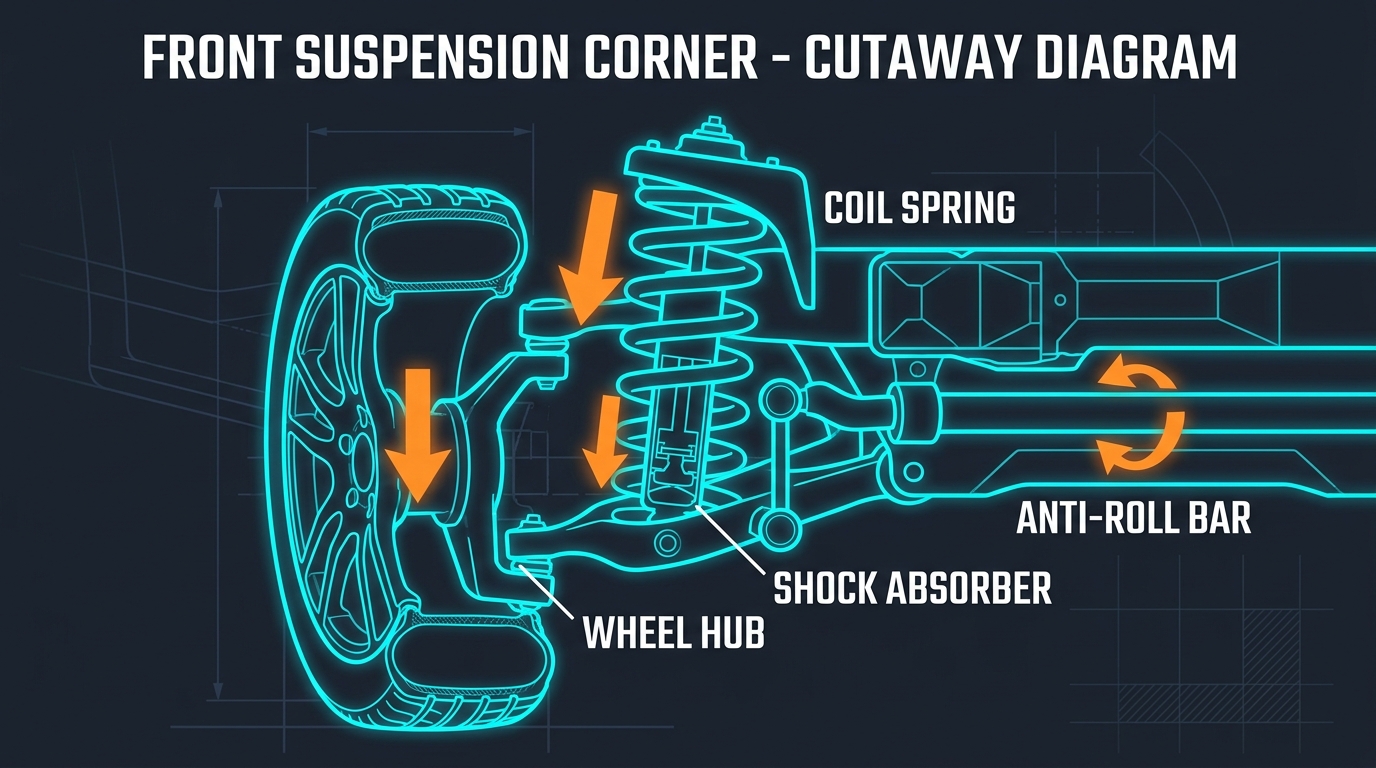
Springs sit between each wheel and the body, compressing to absorb bumps so the wheel can rise over an obstacle without launching the whole car. But a spring alone would keep bouncing forever — so every corner also has a shock absorber (damper): an oil-filled tube that resists rapid motion and settles the car within a bounce or two.
The third piece is the anti-roll bar, a steel bar linking the left and right suspension. In a fast corner, the car’s weight leans hard onto the outside wheels; the bar twists to resist that lean, keeping the body flatter and the inside tire planted.
Brakes, steering, and suspension share one deeper job: managing the grip of four small patches of rubber. Stopping is grip. Turning is grip. Even comfort is really about keeping tires pressed against an imperfect road. Master these three systems and you understand not just how a car moves — but how it stays under control.