A gasoline car is a mechanical machine — but it’s born, fed, and governed by electricity. Every start begins with a chemical power bank, every mile is powered by an onboard generator, and every decision runs through a computer reading dozens of sensors. This is the car’s nervous system.
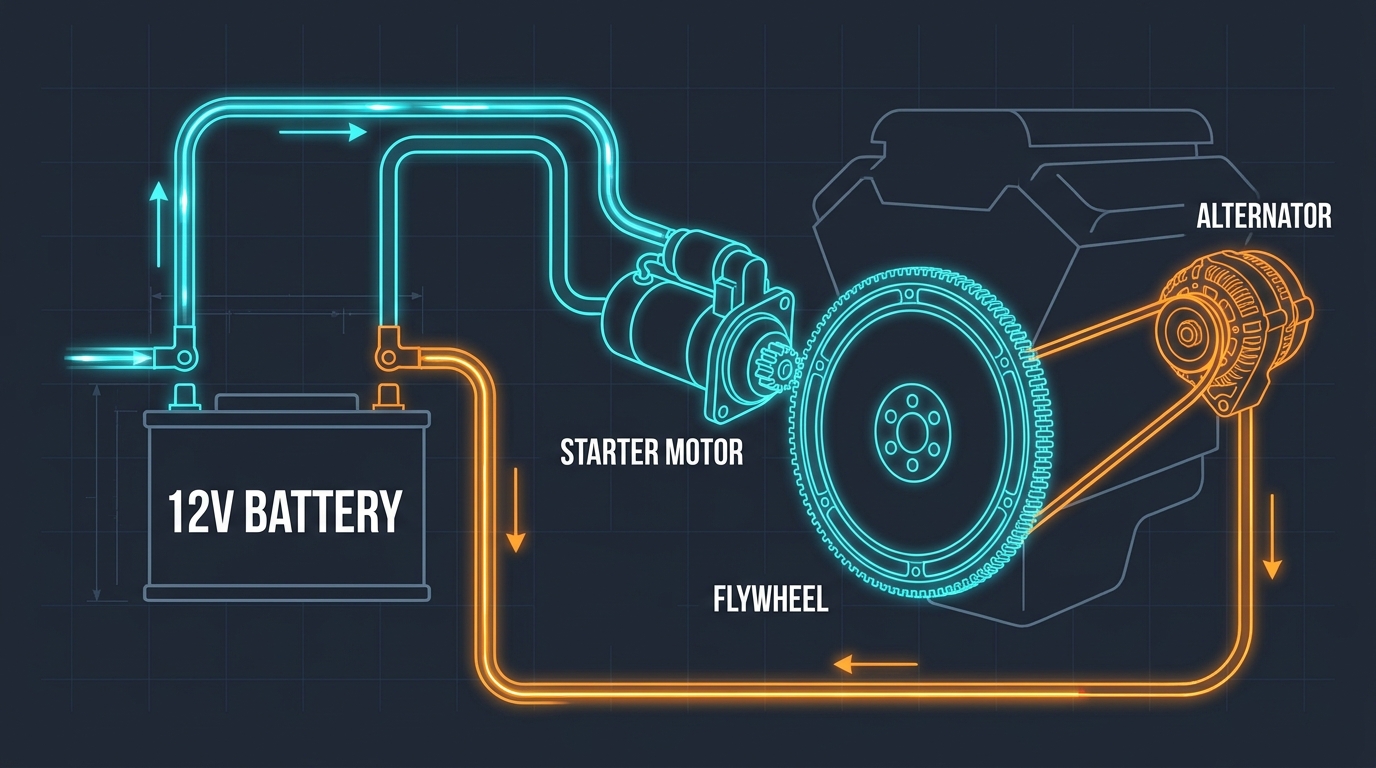
The Spark of Life: Starting the Engine
It starts with the 12-volt battery, which stores energy chemically and releases it as electrical power on demand — think of it as a heavy, liquid-filled power bank. It runs your lights and locks when parked, but its biggest job happens in one dramatic moment.
An engine can’t start spinning on its own. When you turn the key, the battery dumps a massive jolt of current into the starter motor — a powerful electric motor whose small gear pops out and meshes with the engine’s heavy flywheel. The starter physically cranks the entire engine over until the spark plugs begin firing, then quietly disengages once the engine runs on its own.
This is also why a dead battery is so decisive. Leave your headlights on overnight and the battery drains its chemical energy; without enough current to spin that heavy starter, the engine greets you with a click and nothing more.
The Power Plant: The Alternator
Here’s the thing — the battery only has enough juice for starting and short stints. The moment the engine runs, a device called the alternator takes over as the car’s power plant.
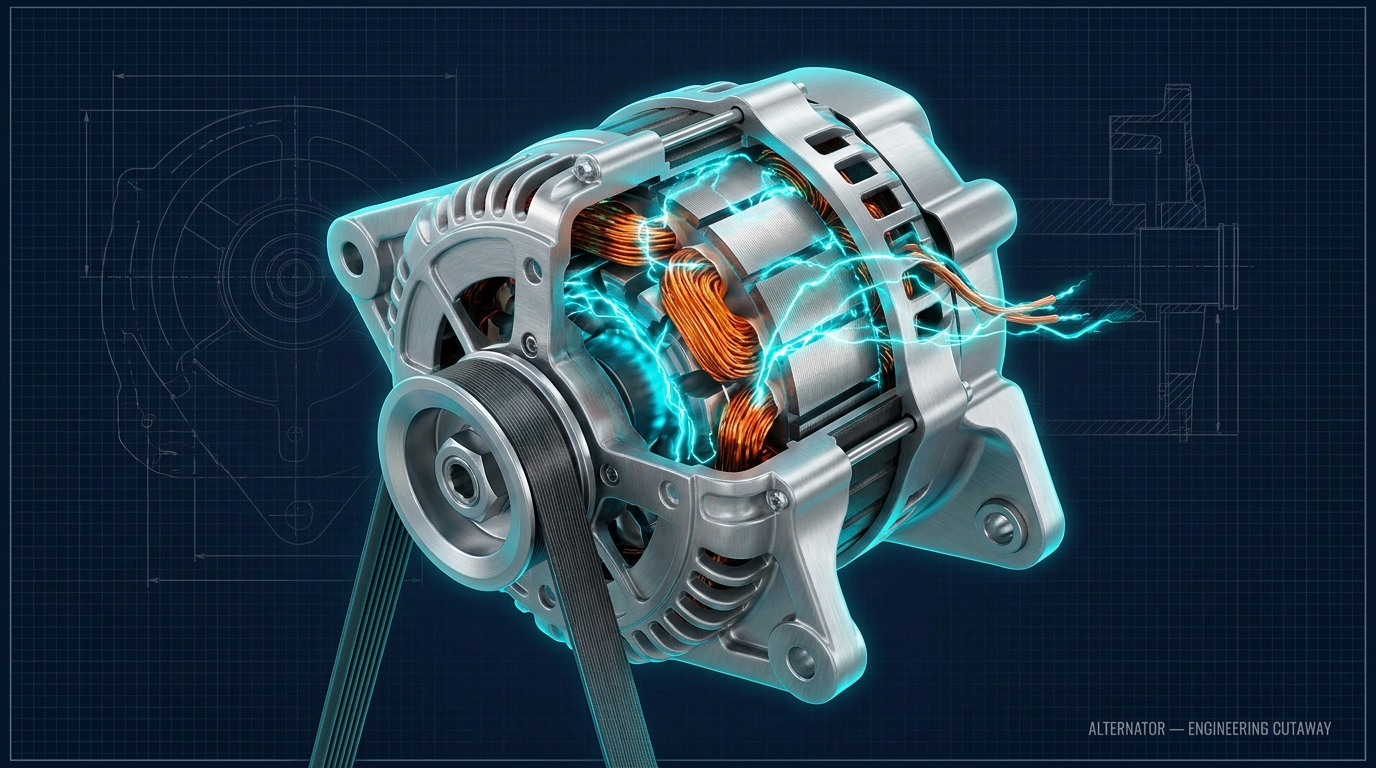
The engine spins a rubber belt, the belt spins the alternator, and inside, magnets sweeping past copper windings generate all the electricity the car needs: spark plugs firing, headlights shining, radio playing, phone charging. The alternator has a crucial second job too — recharging the battery, steadily replacing the energy used during that morning start so full power is ready for the next one.
The Network: Wiring, Fuses, and the ECU
Distributing all that power is a wiring harness — miles of copper wire bundled into a web that reaches every component in the vehicle, carrying both power and data signals exactly like a body’s nerves.
Protecting the network are fuses: tiny sacrificial guards that intentionally melt and break the circuit if too much current flows. A fifty-cent fuse dies so a thousand-dollar computer — or the car itself — survives an electrical fault.
And at the center sits the ECU, the Engine Control Unit — the brain of the vehicle. It reads data from dozens of sensors monitoring air, fuel, temperature, and exhaust, and makes thousands of split-second decisions to keep the engine running smoothly, cleanly, and efficiently. Modern cars extend this into a whole network of computers, but the principle stays the same: sensors in, decisions out, constantly.
The mechanical parts of a car get the glory, but electricity decides everything: whether the engine wakes up, how rich the fuel mixture runs, when the cooling fan kicks on. Learn the battery–starter–alternator triangle and the sensor-fed ECU, and suddenly half of all no-start problems and dashboard warning lights start making sense.