Here’s a mental model that instantly makes engines easier to understand: an engine is fundamentally an air pump. Power doesn’t come from fuel alone — it comes from burning fuel with oxygen, and the amount of air an engine can inhale, mix, burn, and exhale sets the ceiling on everything it does.
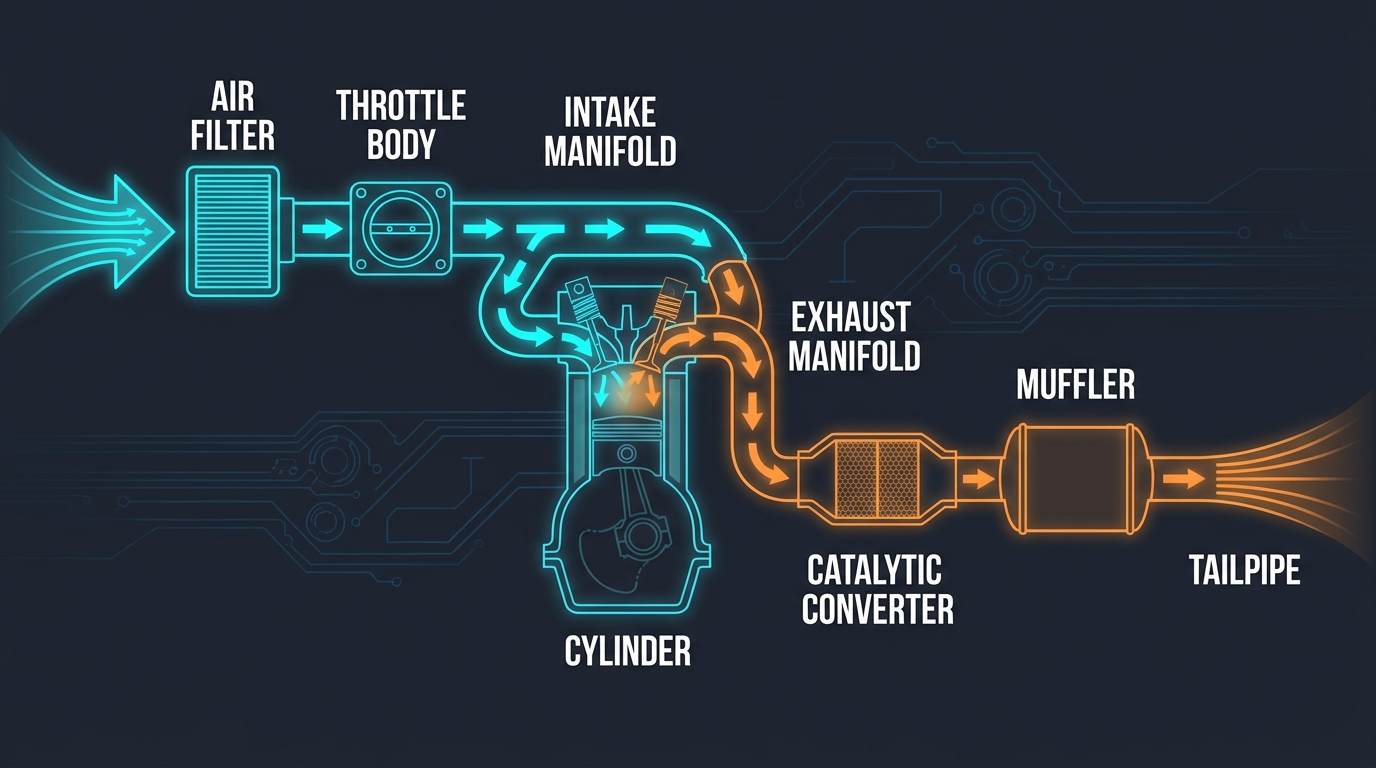
Breathing In
The journey starts at the air filter, which traps dust, leaves, and bugs before they can enter the engine — a heavy-duty dust mask for your car. Dirty air would sandblast the cylinders from the inside.
Next comes a surprise for most beginners: your gas pedal doesn’t control fuel. It controls air. The pedal opens the throttle body, a mechanical flap that lets more air rush in the harder you press. The engine computer then adds fuel to match the airflow — not the other way around.
Past the throttle, air enters the intake manifold, a set of branched tubes that splits the main airstream and delivers an equal, well-timed gulp of air to each individual cylinder.
Feeding the Fire
Meanwhile, fuel makes its own journey. The fuel pump sits in the gas tank at the back of the car, pushing gasoline forward through lines under high pressure — a heart for the fuel system. A fuel filter catches microscopic rust and dirt along the way, protecting the incredibly fine spray holes downstream.
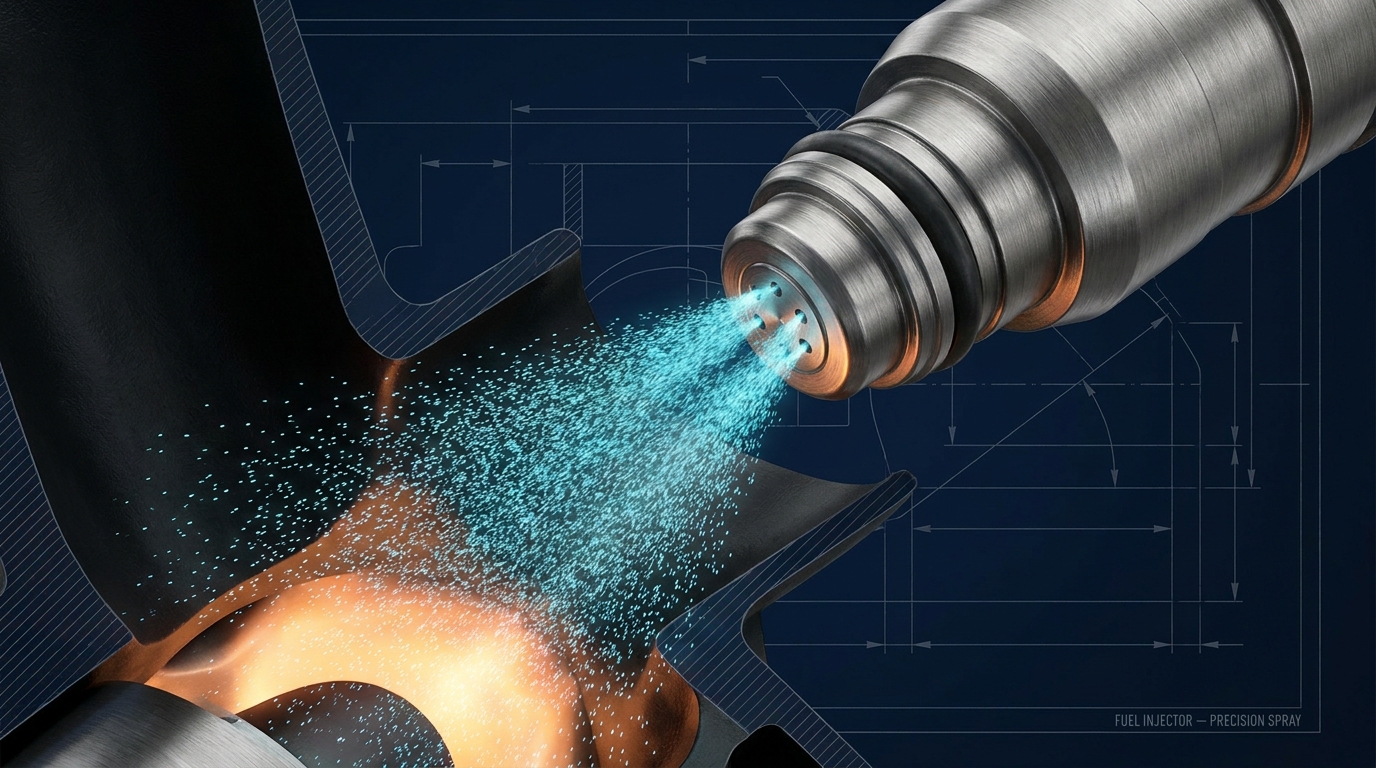
Those spray holes belong to the fuel injectors: electronically controlled nozzles that fire a precisely timed mist of fuel into the incoming air. The finer the mist, the faster and more completely it burns.
And the recipe is remarkably strict. The chemically ideal mixture is about 14.7 parts air to 1 part fuel by mass. The car’s computer reads oxygen sensors in the exhaust and adjusts the mixture in real time, dozens of times per second, to stay near that target.
Exhaling
After each power stroke, the burnt gases have to leave — fast. The exhaust manifold collects the hot, high-pressure gases from each cylinder and funnels them into a single pipe.
From there they pass through the catalytic converter, a chemical reactor built into the exhaust. Using precious metals like platinum and palladium, it converts carbon monoxide and unburned fuel into water vapor and carbon dioxide, and turns harmful nitrogen oxides back into harmless nitrogen — the reason modern cars run so much cleaner than classics.
Without a muffler, an engine would sound like continuous gunfire. Inside it, a maze of tubes and chambers reflects sound waves against each other so they cancel out, leaving a muted hum by the time gases exit the tailpipe. And then the whole cycle — inhale, burn, exhale — repeats thousands of times every minute.
Once you see the engine as one continuous breathing circuit, a lot of car knowledge falls into place: why a clogged air filter saps power, why a failing fuel pump causes sputtering under load, and why exhaust design changes both the sound and the performance of a car. Air in, fuel in, exhaust out — everything else is refinement.