Spec sheets love big numbers, but they rarely explain them. Why does a diesel truck out-pull a sports car it could never out-run? Why does a light hatchback humble luxury muscle? The answers come from a handful of ideas — torque, horsepower, grip, and weight — that together explain almost everything about how a car behaves.
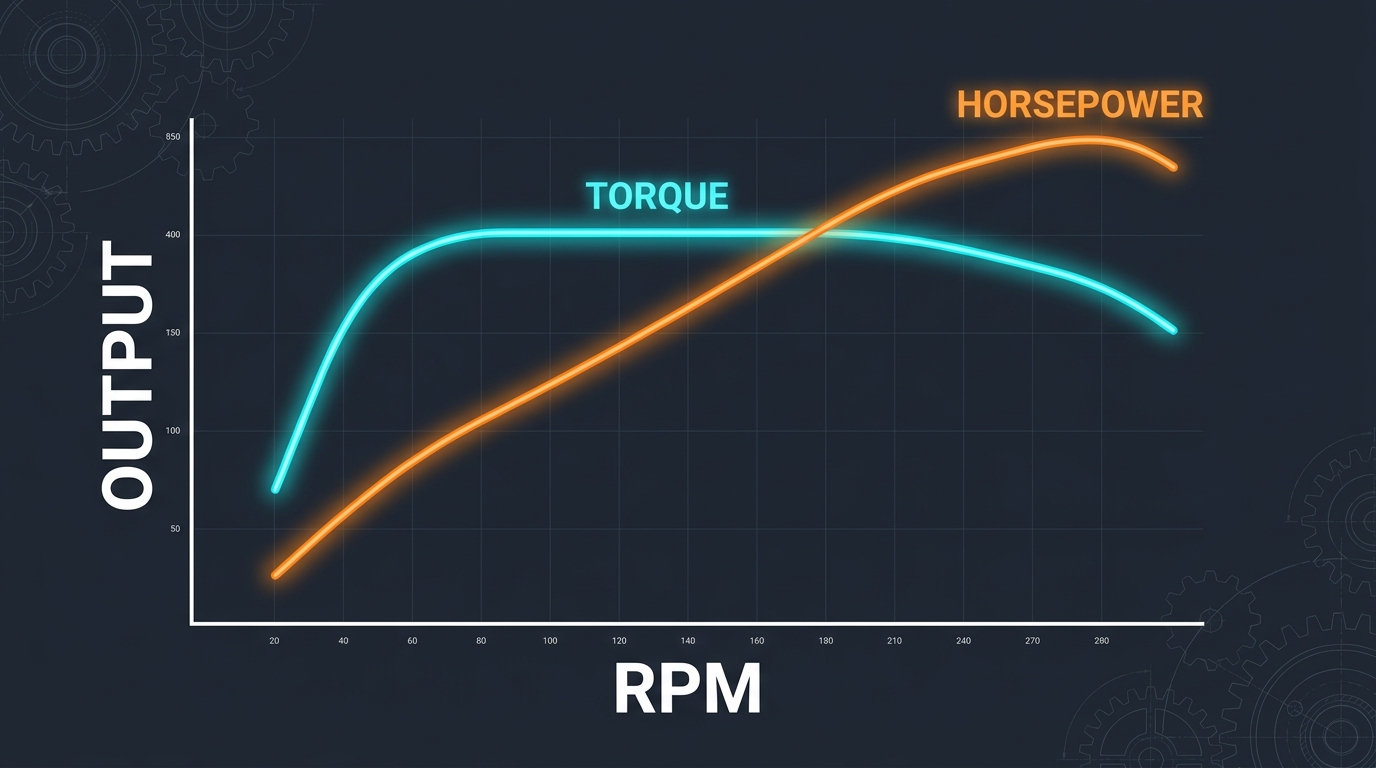
Torque Is Twist, Horsepower Is Torque With a Deadline
Torque is twisting force — the raw shove your engine puts on the crankshaft. Imagine loosening a stubborn bolt with a wrench: push harder, or use a longer handle, and you make more torque. It’s what pins you into your seat when you floor it, but on its own it tells only half the story.
Horsepower measures how quickly the engine can do work, and the recipe is simple: torque multiplied by engine speed. One strong shove per second is nice; thousands of shoves per second is horsepower. That’s why an engine making modest torque at screaming RPM can out-power a lazy giant that twists hard but slowly.
Then comes the twist in the tale: your transmission can multiply torque — low gears trade speed for extra shove, like a bicycle’s easiest gear on a climb. What gearing can never multiply is power. That’s why engineers obsess over horsepower: with the right gear selected, it sets the true ceiling on acceleration.
Every engine’s personality is drawn in its torque and power curves. A diesel truck piles up torque just off idle for effortless towing, then runs out of breath; a sports bike makes little torque but revs to the moon, stacking up huge horsepower. Neither is wrong — they’re tuned for different jobs.
The Grip Budget: Weight Transfer, Understeer, Oversteer
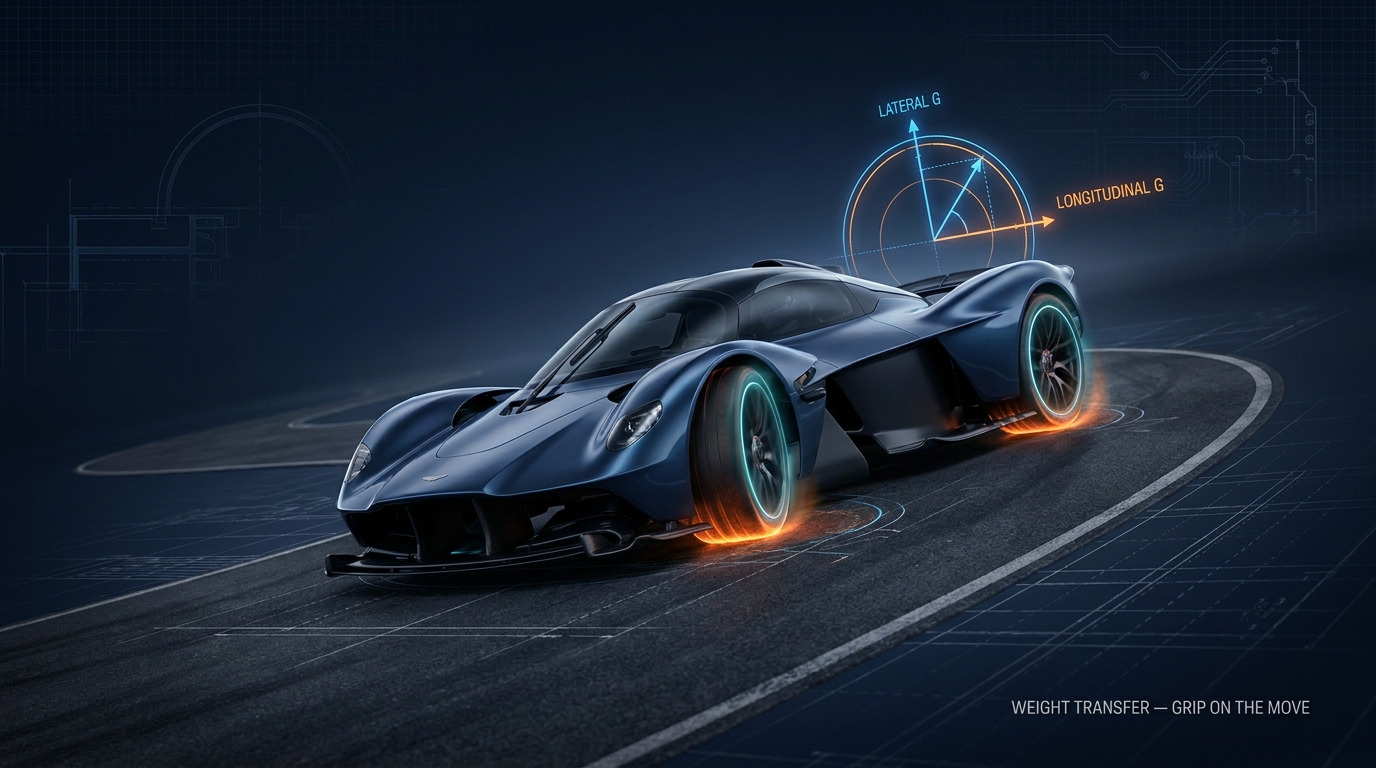
Each tire has a fixed grip budget it can spend on braking, accelerating, or turning — and every demand draws from the same account. Ask for hard braking and hard cornering at once and the tire goes overdrawn, letting go without warning. Racers call this the friction circle, and managing it is the art of driving fast.
The budget also shifts constantly, because your car’s weight never sits still. Brake, and weight surges onto the front tires, diving the nose. Accelerate, and it slings rearward. Corner, and it leans onto the outside pair. Loaded tires gain grip; unloaded tires lose it.
When the front tires run out of grip first, you get understeer — you turn the wheel and the car plows wide. Road cars are deliberately tuned to understeer first, because the instinctive fix (easing off the gas) actually works. When the rear tires give up first, that’s oversteer — the tail swings wide while the nose tucks in. It looks spectacular in drift videos, but uncaught it becomes a spin, which is why stability control exists.
Alignment and the Ratio That Rules
Your wheels aren’t bolted on perfectly straight — on purpose. Camber tilts the tire tops inward so the loaded outside tire sits flat and grips with its whole face mid-corner. Caster tilts the steering axis back like a shopping-cart wheel, making the steering self-center and hold steady at speed. Toe angles the tires slightly toward or away from each other — a whisper of toe-in adds highway stability, while racers run toe-out up front for eager turn-in. Fractions of a degree, and the car’s whole character changes.
Finally, the great equalizer: power-to-weight. Every kilogram must be accelerated, braked, and dragged through corners, so mass taxes everything the car does. A featherweight hatchback with 200 horsepower can keep up with a two-and-a-half-ton luxury barge boasting 400, because each of its horses hauls less baggage. Lotus founder Colin Chapman turned it into a gospel — “simplify, then add lightness” — and it’s why serious performance cars wear carbon fiber and skip the massage seats. Where the weight lives matters too: mounted low and spread evenly, it keeps the car flat and both axles gripping fairly.
This is the layer of car knowledge where numbers turn into feel. Torque you sense in your chest, horsepower in the stopwatch, weight transfer in your hands, and power-to-weight in the way a small, light car dances where a heavy one lumbers. The physics were always there — now you can name them.